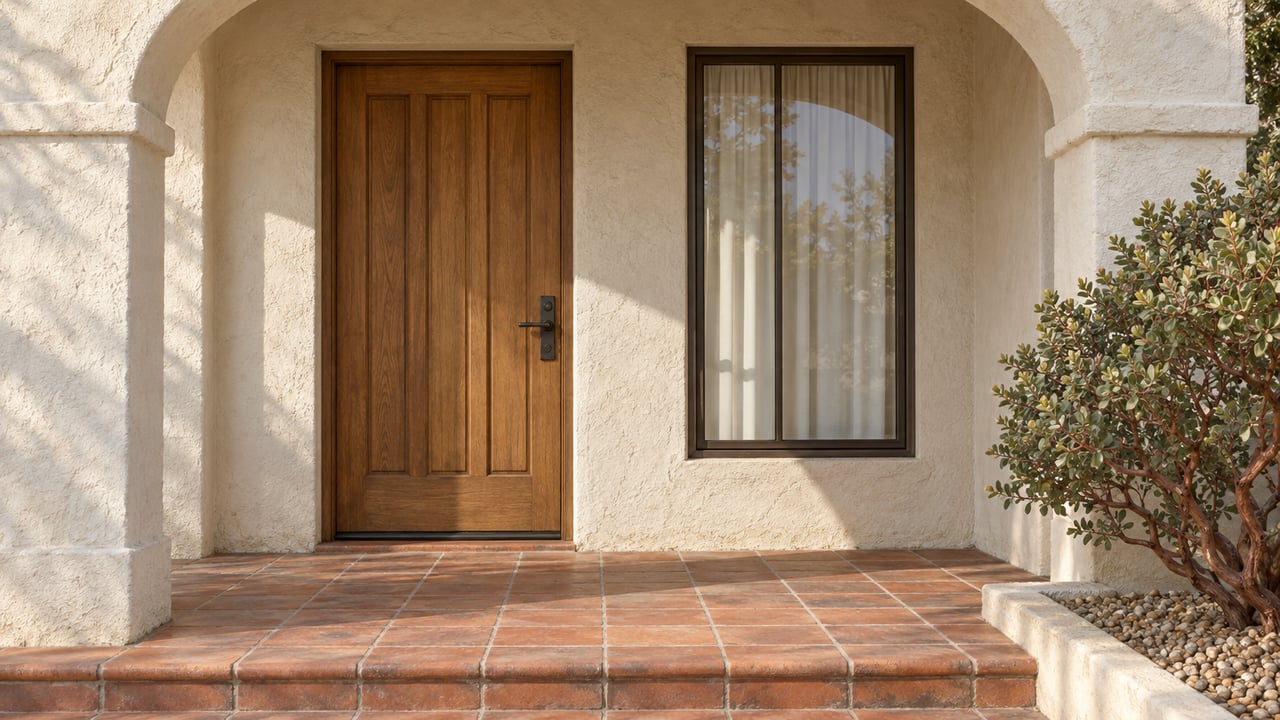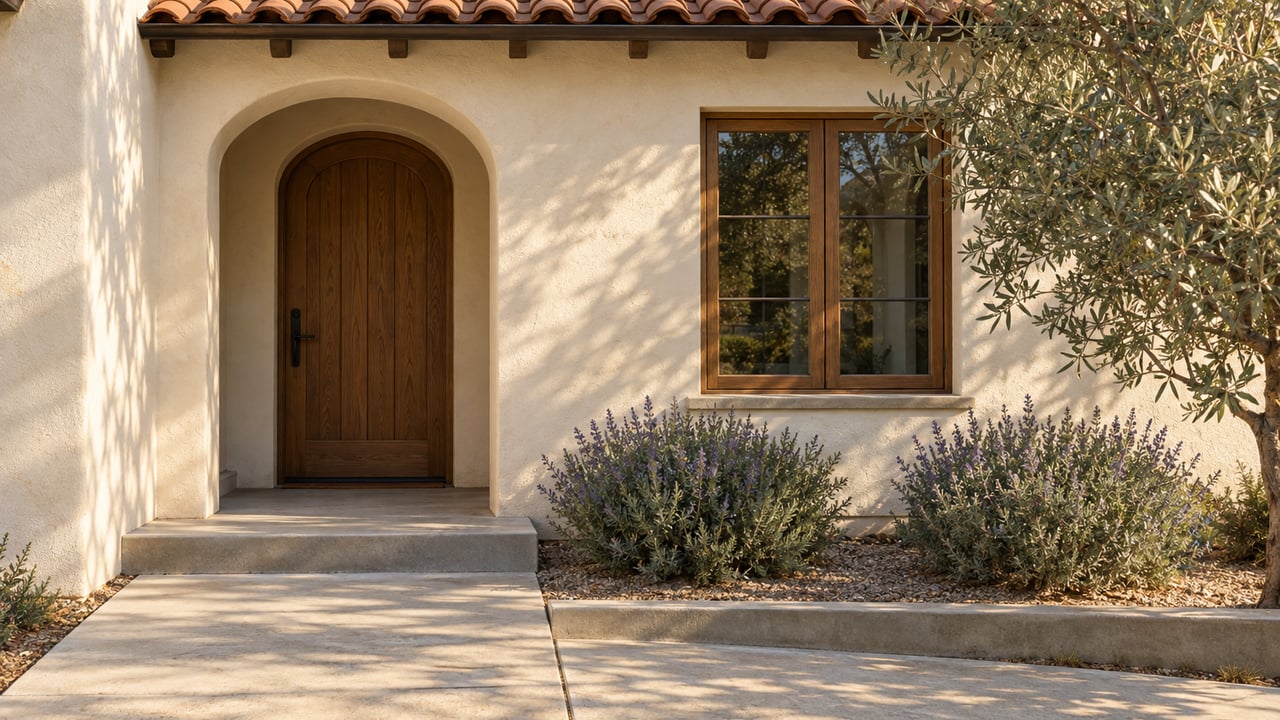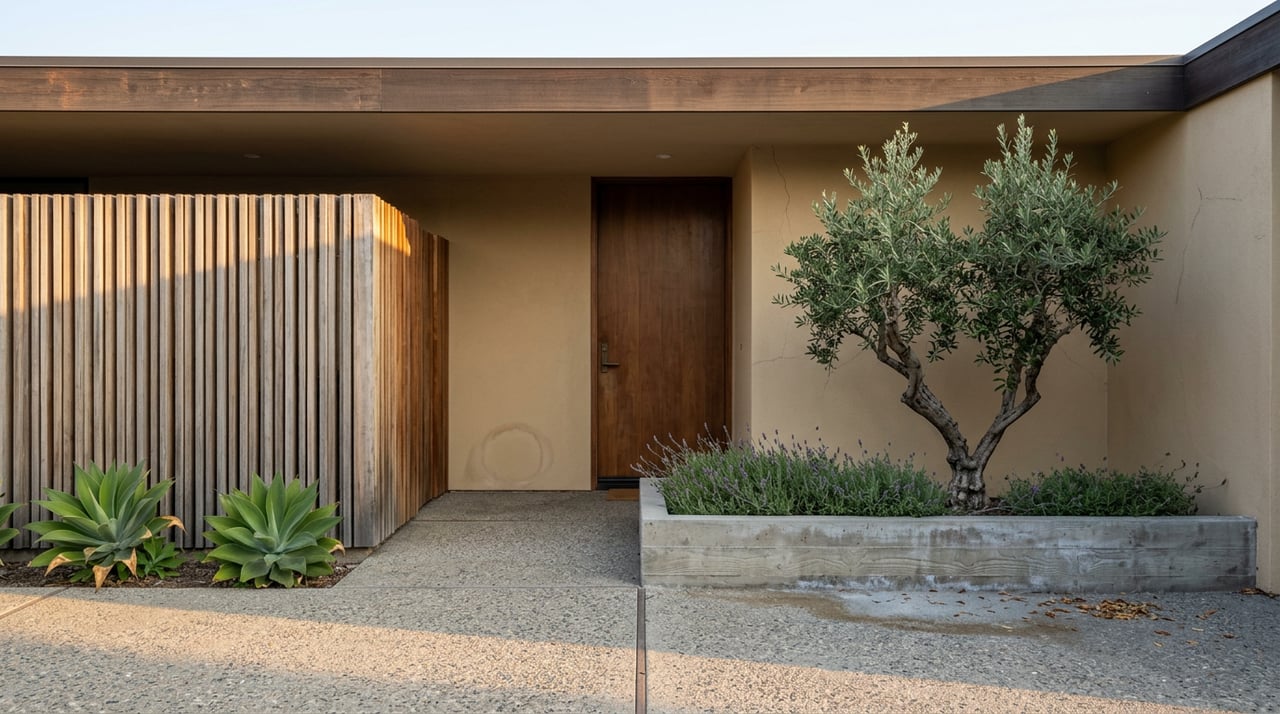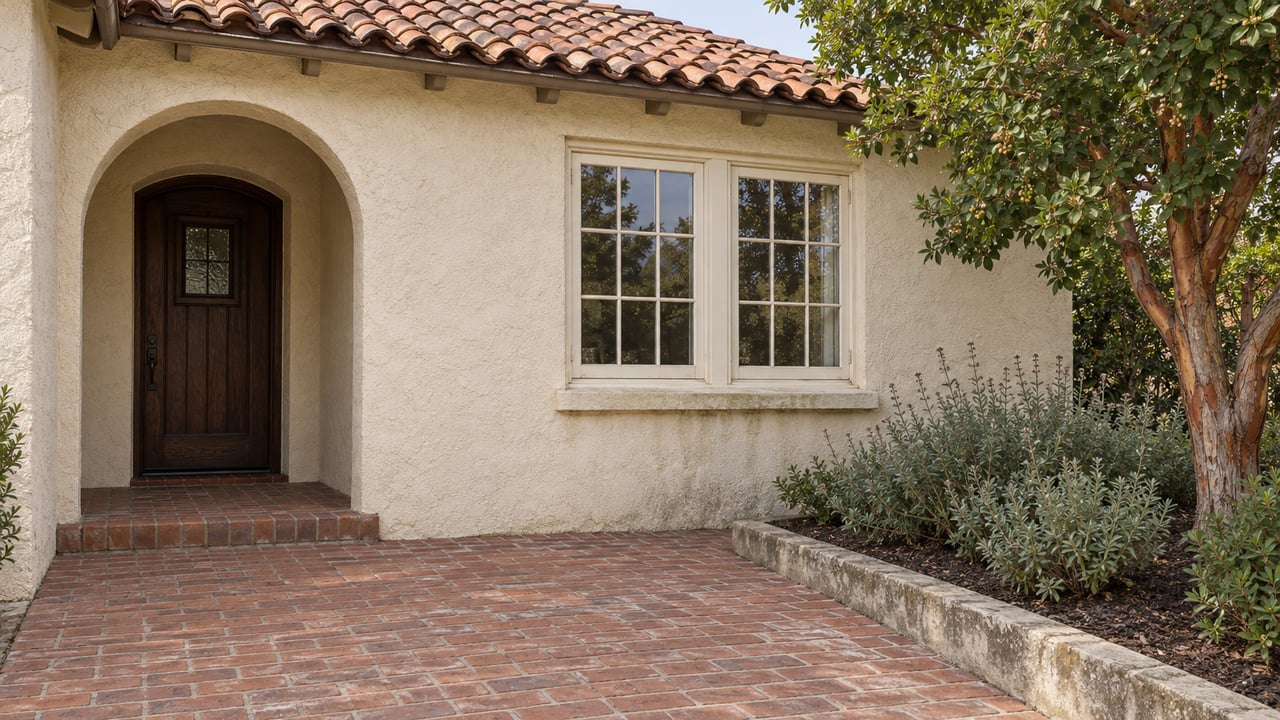
On October 8, 2025, an application was filed with Los Angeles City Planning for a lot on N Avenue 54, inside the Highland Park–Garvanza Historic Preservation Overlay Zone. It described a one-story detached ADU of 759.84 square feet at the rear of the lot. The plans called for stucco walls, a shed roof and vinyl windows throughout: fixed, sliding and double-hung. The application also converted 415.45 square feet of the existing house into a junior ADU. City Planning approved it the next day, October 9. The case record lists no Board review date and no appeal.
That one-day approval is easier to appreciate once you see what the same overlay asks of a front window.
What a street-facing window has to match
The Highland Park–Garvanza HPOZ is the largest in the city. It covers about 4,000 structures, including more than 50 Historic-Cultural Monuments. Its Preservation Plan names Highland Park, Garvanza, Montecito Heights and Mount Angelus within the district. Each property carries a survey designation of Contributing, Contributing Altered or Non-Contributing. That designation, together with the scope and visibility of the work, sets the review path. Exterior work generally needs HPOZ review before construction starts, including some work that doesn't need a building permit, and work done without approval can lead to code enforcement and fines.
Section 7.3 of the 2010 Preservation Plan covers windows. Its guidance for a historic window that can't be repaired is specific:
"If windows are determined to be non-repairable, replacement windows should match the historic windows in size, shape, arrangement of panes, materials, hardware, method of construction, and profile. True divided-light windows should usually be replaced with true divided-light windows, and wood windows with wood windows."
The plan does relax its stance on rear and side walls that can't be seen from the street. There, replacements for non-historic windows may use different materials as long as pane arrangement, size and shape stay similar. The plan says it wrote this alternative because wood replacements are "not always economically feasible" for many owners in the district. Even so, it calls swapping existing wood windows for aluminum or vinyl on those hidden walls "strongly discouraged." On visible facades, the plan calls filling in historic windows, resizing them, or cutting new openings inappropriate.
Staff can sign off on in-kind repairs, matching replacement of non-original windows where originals remain, and certain opening changes that can't be seen from the street. Projects outside those conditions, or with unclear compliance, can be sent to the HPOZ Board. The Board meets on the second and fourth Thursday of each month at the Arroyo Seco Library. The City's process chart estimates 3 to 21 days for Conforming Work and up to 75 days for a Certificate of Appropriateness, plus more time if a decision is appealed. That chart dates from 2017, so read it as a rough guide rather than a promise. Minor Conforming Work applications currently carry no fee. Major Conforming Work and Certificates of Appropriateness do.
In short, the overlay is built to look closely at the side of the house the street sees.
Why the backyard gets the easier path
State ADU law turns that priority around. California allows ADUs in historic districts and on lots where the main house is a protected historic resource. Local agencies can apply only objective standards that don't unreasonably restrict ADU construction. ADUs in historically significant districts are also exempt from local ADU parking requirements.
"Objective" is the important word. In a July 24, 2026 fact sheet, City Planning says most guidelines in its HPOZ Preservation Plans "do not meet the test under State law to qualify as objective standards." As a result, HPOZ neighborhoods "are often left without an ability to shape the design of some housing development projects." The word "should" in Section 7.3 can guide a Board decision on a front window. It can't be used to stop a ministerial ADU in the backyard.
Plenty of owners have used that path. The Eastsider counted 422 ADU permits in Highland Park from 2020 through April 30, 2025, 18th among 114 neighborhoods. Citywide, Crosstown reports 7,321 ADU permits in Los Angeles in 2025, which made ADUs nearly the city's largest source of new housing that year.
The draft that would close part of the gap
City Planning's Office of Historic Resources, working with consultant Architectural Resources Group and funded by a REAP 2.0 grant, is writing Objective Design Standards for ADUs in HPOZs. The June 22, 2026 draft would require the following for a detached ADU, each subject to exceptions where state law requires them:
- Placement behind the rear wall of the primary residence.
- Coverage of no more than 50% of the rear yard.
- A height, measured to the highest ridge, lower than the main house.
- A roof form that matches the main house: gable, hipped, flat and so on.
- Wall cladding that matches the main house. Fiber cement or wood composite is allowed where the house is wood-clad.
- No flush-mount sliding windows and no new skylights on street-facing roof planes.
Attached ADUs would also need to match the house's roof cladding in material, size and color and step in at least four feet from the side walls. New junior ADU entrances couldn't go on the front facade.
The ADU draft doesn't ban vinyl windows. The separate infill-housing draft does. An applicant whose ADU doesn't meet the standards can revise it, or can opt into the ministerial Conforming Work process under the district's Preservation Plan. The standards would supplement the Preservation Plans, not replace them. Changes to a primary Contributing building would still go through existing HPOZ review.
The draft may still change. In the Larchmont Chronicle on July 30, a columnist reported that preservationists broadly rejected it as one-size-fits-all. Larchmont Buzz reported that the Greater Wilshire Neighborhood Council's land use committee argued the draft left out standards for windows, doors, rooflines and equipment placement. Its August 14 follow-up reported that the full council voted 13 to 2 to request revisions. Those comments came from another HPOZ, but they push in one direction, toward tighter rules on materials and visibility.
City Planning's July schedule called for a second draft in August or September, adoption steps in October and November, and City Council consideration in December 2026. December is also the grant deadline. As of October 11, 2026, our research found no confirmed City Planning Commission hearing date for the HPOZ standards. The citywide Missing Middle LA ordinances have a Commission date of November 12, but that is a separate process.
How this shows up in a Highland Park offer
For a buyer, the practical point is that two parts of the same lot run on different rules and different timelines. Restoring the front of a Contributing house follows a plan written in 2010, with guidance specific enough to set the materials budget. Building in the backyard currently follows a lighter set of state-driven rules that could become more detailed within a few months. Whether a buyer's ADU plans get reviewed before or after adoption, and in what final form, affects roof shape, cladding and window choices. That makes it part of how the lot's upside should be priced.
The first fact to pin down for any address is its survey designation. The City directs owners to ZIMAS and the district map for that. The planner assigned to the district can then say which review path a specific project would take.
Timing is less tight than it was a few years ago. According to the California Association of Realtors, existing single-family homes in Los Angeles County sold at a median of $946,950 in August 2026, up 1.7% from a year earlier. Median time on market was 30 days, and the unsold-inventory index was 3.9 months. Those are countywide figures, since C.A.R. doesn't publish Highland Park data. Still, a market at that pace often leaves room during due diligence for a conversation with a planner.
What the ADU means for value is harder to pin down. An FHFA analysis found that California single-family properties with ADUs had a median appraised value of $1,064,000 in 2023, compared with $715,000 for properties without one. That is a statewide association, not proof that the ADU caused the difference.
Some historic houses also carry a Mills Act contract. The Los Angeles Conservancy reports that these contracts transfer to the new owner at sale and that the City hasn't accepted new ones since 2020. A new annual fee took effect February 23, 2026: $675 for residential properties with one to four units, currently charged only on contracts signed after 2014.
FAQ
Would the draft standards ban vinyl windows on an ADU? Not as of the June 22, 2026 draft. It bans flush-mount sliders and requires matching roof form and wall cladding. The vinyl ban appears only in the separate infill draft.
Do the new standards change how a remodel of the main house is reviewed? According to City Planning's fact sheet, no. Rehabilitation chapters of the Preservation Plan still apply, and the HPOZ Board remains the decision-maker on rehabilitation projects.
What about an older unpermitted ADU already on a property? AB 2533, effective January 1, 2025, bars cities from denying permits for certain unpermitted ADUs built before 2020, with exceptions for building safety. The law doesn't, on its face, remove HPOZ review of exterior work, so the specific parcel's situation is a question for City Planning.
If you're looking at a Highland Park–Garvanza house and wondering what the front facade will ask of you and what the backyard could become before the December deadline, Alyssa Valentine and Anselm Clinard can go through the lot's designation, renovation scope and timing with you before you write an offer. Contact Us.
This article is general information, not legal, tax or financial advice. Consult a qualified professional about your situation.