By Alyssa Valentine & Anselm Clinard
We work with homes across Northeast Los Angeles that span nearly a century of architecture — 1920s Spanish Revival bungalows in Silver Lake, mid-century moderns in Los Feliz, renovated Craftsman foursquares in Atwater Village. One design style keeps coming up in conversations with our design-minded clients: modern classic. It threads a needle between the ornate and the minimal, and when it's done well, it makes a home feel both rooted and current. Here's what the style actually is, and how it tends to show up in Los Angeles homes.
Key Takeaways
- Modern classic style blends traditional architectural detail with contemporary simplicity — the result is rooms that feel elevated without feeling stiff
- Neutral color palettes form the base, with layered textures and restrained accent colors adding depth
- Quality of materials matters more than quantity of objects
- The style is highly adaptable and works across home types, from Silver Lake hillside homes to Echo Park bungalows
The Core Idea: Classical Bones, Modern Restraint
Modern classic style starts with classical design principles — symmetry, proportion, architectural detail — and strips away the excess. Crown molding, coffered ceilings, and panel wainscoting appear, but they're painted in muted neutrals and paired with furniture that has clean, unfussy lines.
The goal is not to recreate a period interior. It's to take what's enduring from classical design and let it coexist with modern comfort.
The goal is not to recreate a period interior. It's to take what's enduring from classical design and let it coexist with modern comfort.
What Separates Modern Classic From Traditional
- Traditional style leans into ornamentation: heavy drapery, carved furniture, layered pattern
- Modern classic edits that impulse — the molding stays, but the room breathes
- Furniture sits closer to the ground and favors streamlined silhouettes over carved legs and tufted backs
- Lighting does design work rather than decorative work — a statement fixture in a restrained space reads differently than a chandelier in a busy one
In practice, modern classic is often the right answer for a Northeast LA home that has original architectural details worth keeping but needs an interior that reads as contemporary.
Color and Material: Where the Style Lives
The palette in a modern classic interior is deliberately neutral. Whites, creams, warm grays, and soft earth tones form the foundation. Those tones aren't boring — they're a controlled backdrop that lets texture and form do the talking.
Accent colors appear, but sparingly. Deep navy, muted sage, or soft black used in upholstery, artwork, or a single wall create definition without breaking the calm.
Accent colors appear, but sparingly. Deep navy, muted sage, or soft black used in upholstery, artwork, or a single wall create definition without breaking the calm.
Materials That Define the Look
- Marble — countertops, fireplace surrounds, or bathroom surfaces; adds weight and permanence
- Velvet — upholstery in muted jewel tones or warm neutrals; softens a room without introducing pattern
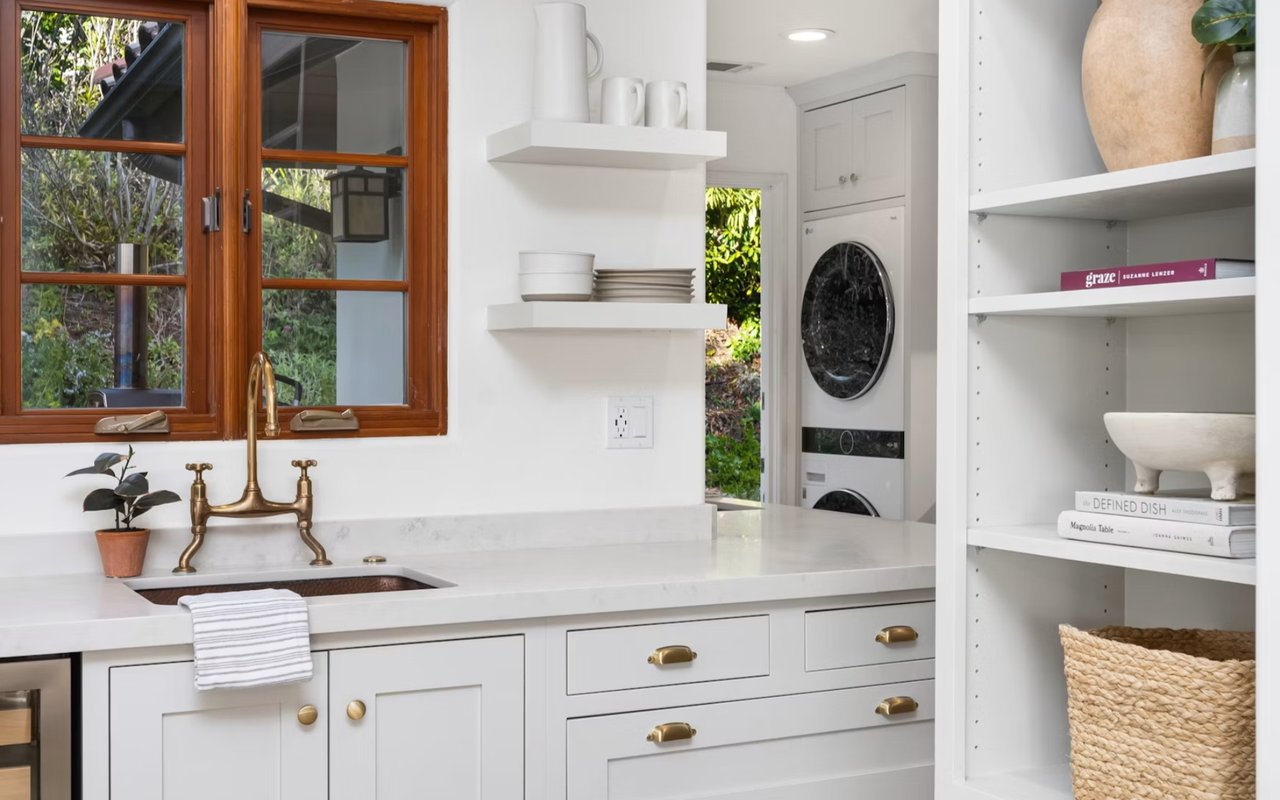
- Brass and unlacquered metals — warm hardware, lighting fixtures, and cabinet pulls that age naturally
- Wood — warm-toned floors and millwork keep the room from going cold
- Linen and natural fiber — textiles that introduce texture without visual noise
The restraint is the point. Fewer, better objects in a modern classic room create a sense of intentionality that's hard to achieve any other way.
How Modern Classic Works in Northeast LA Homes
Silver Lake, Los Feliz, and Echo Park are neighborhoods where buyers care about architecture. The homes have character — arched doorways, original plaster, built-in shelving, leaded glass — and modern classic style honors those features rather than fighting them.
A Spanish Revival with original arched openings doesn't need to be stripped back to feel contemporary. The right furniture, a controlled palette, and well-chosen lighting can make the original architectural detail feel like the design decision it was.
A Spanish Revival with original arched openings doesn't need to be stripped back to feel contemporary. The right furniture, a controlled palette, and well-chosen lighting can make the original architectural detail feel like the design decision it was.
Where Modern Classic Fits Particularly Well
- Craftsman homes: the existing millwork, built-ins, and natural wood tones are already a classical foundation; modernizing the palette and furniture keeps the character without the heaviness
- Spanish Revival: the stucco walls, arched passages, and Saltillo or clay tile floors respond well to the warm neutrals and natural materials of modern classic
- Mid-century modern: where the original bones are already minimal, modern classic adds warmth through texture and material without cluttering the lines
This flexibility is part of what makes the style so durable. It doesn't impose a fixed look — it sets a framework that adapts.
FAQs
Is modern classic the same as transitional style?
They're related but not identical. Transitional style also mixes traditional and contemporary elements, but it tends toward a softer, cozier result. Modern classic is more architectural — it leads with structure, detail, and proportion rather than comfort and layering.
How much does it cost to achieve a modern classic look?
The style rewards investment in quality materials over volume of objects. A well-made sofa in a neutral velvet, good hardware throughout, and a single strong piece of art will do more than a room full of average pieces. It's a style that scales to budget but always benefits from editing.
Can modern classic work in a smaller home?
Yes. The restraint the style demands actually suits smaller spaces well. A controlled palette, appropriately scaled furniture, and architectural detail like panel molding make a smaller room feel considered rather than cramped.
Design Your Northeast LA Home With Valentine & Clinard
We bring a genuine interest in architecture and design to every home we work with, and that shows up whether we're preparing a Silver Lake listing or helping a buyer see the potential in a Los Feliz fixer. Our background in renovation means we understand how design choices affect both livability and market value.
Reach out to us to learn more about how we approach design and value in Northeast LA homes.
Reach out to us to learn more about how we approach design and value in Northeast LA homes.