If you want a neighborhood that feels calm, residential, and close to nature without being cut off from the rest of Los Angeles, La Crescenta is worth a closer look. For many buyers, the appeal is simple: foothill scenery, mature homes, and a daily rhythm that feels a little quieter than more central parts of the city. In this guide, you’ll get a practical look at what living in La Crescenta is really like, from the setting and housing stock to the lifestyle and who the area tends to fit best. Let’s dive in.
La Crescenta at a Glance
La Crescenta sits north of the 210 Freeway, with Glendale to the south and west, La Cañada Flintridge to the east, and the San Gabriel Mountains and Angeles National Forest along much of its northern edge. Public data often groups La Crescenta with Montrose, so many local statistics describe the combined La Crescenta-Montrose area rather than La Crescenta alone.
According to Los Angeles County Planning, La Crescenta is the larger northern subarea within that community. The area is about 3.45 square miles, with a population of 19,893 in the county’s recent community spotlight. That relatively compact footprint helps explain why the neighborhood often feels established and close-knit.
The Feel of Daily Life
One of the clearest things about La Crescenta is that it is overwhelmingly residential. Los Angeles County Planning reports that more than 82% of the land area is single-family residential, while about 5% is multi-unit housing, about 2% is commercial, and about 9% is government use.
In everyday terms, that means you are not moving to La Crescenta for a dense urban experience. You are moving here for a foothill neighborhood where homes shape the streetscape, commercial activity is limited to a few practical corridors, and the overall pace tends to feel more suburban than city-centered.
Because the area is unincorporated, Los Angeles County handles local land-use planning, development review, and many public services. County reporting also identifies sheriff, fire, parks, and library services for the community. For buyers, that is helpful context when you are learning how the area is governed and how local services are organized.
Foothill Boulevard and Getting Around
Foothill Boulevard is the main commercial corridor north of the 210. It connects La Crescenta to nearby areas including Glendale and La Cañada Flintridge, and it plays an important role in the neighborhood’s daily routine.
La Crescenta is also a car-oriented community. County data from 2021 shows that 78.90% of commuters drive alone, 6.25% carpool, 1.56% use public transit, and 3.07% bike or walk. If you are looking for a neighborhood where most errands and commutes happen on foot, this may not be the strongest match.
That said, many buyers see the tradeoff as worthwhile. You get a quieter residential setting and quick access to surrounding foothill communities, while still remaining connected to broader Los Angeles by car.
Outdoor Access Is a Major Draw
For many people, the biggest lifestyle advantage in La Crescenta is how close you are to open space. This is one of those neighborhoods where the foothill setting is not just visual. It shapes how people spend their free time.
Nearby recreation options include Crescenta Valley Community Regional Park, Two Strike County Park, Pickens Canyon Park, Rosemont Preserve, Deukmejian Wilderness Park, and the Angeles National Forest. Los Angeles County notes that Crescenta Valley Community Regional Park includes the first LA County dog park, while Rosemont Preserve offers 7.6 acres of protected open space.
Deukmejian Wilderness Park adds another layer to the area’s outdoor appeal. The City of Glendale describes it as a 709-acre foothill park with trail access and views over Crescenta Valley and the Los Angeles basin. The U.S. Forest Service also describes Angeles National Forest as one of Southern California’s remaining major open-space areas.
If you value trail access, mountain views, and the ability to step out into nature without going far, La Crescenta stands out. That outdoor connection is a real part of the neighborhood’s identity.
What Homes in La Crescenta Look Like
The housing stock in La Crescenta-Montrose leans heavily toward single-family homes. Los Angeles County Planning reports 7,375 housing units in the area, with 76.5% single-family homes and 22.2% multifamily housing. Homeownership is also relatively high at 59.5%, which supports the area’s settled, residential character.
This is not a neighborhood defined by new construction. In fact, 83% of the housing stock was built before 1979, and less than 1% was built since 2010. If you are hoping for a newer, master-planned feel, La Crescenta may not align with your goals.
But if you are drawn to mature homes with personality, this area becomes much more compelling. Older housing stock often brings more architectural variety, established lots, and opportunities to update a home while preserving its original character.
Architectural Character and Hillside Lots
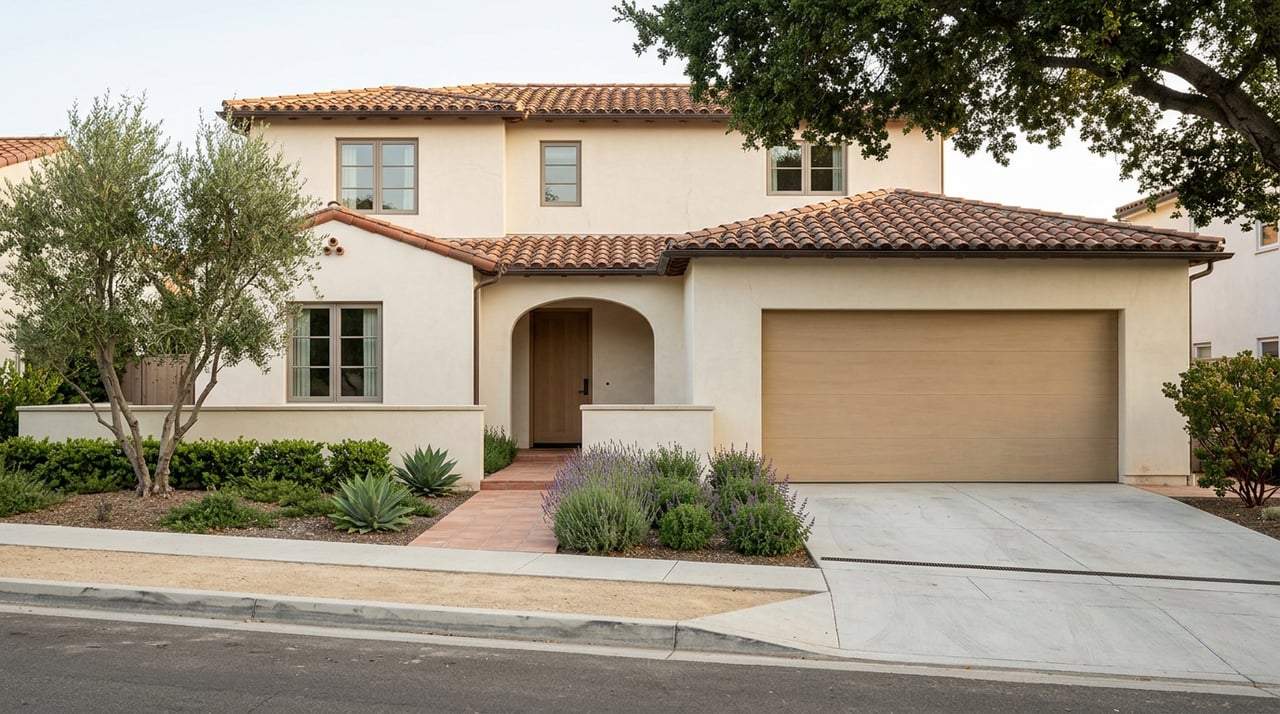
La Crescenta’s built environment is especially appealing if you notice architecture. Los Angeles County’s historic context statement says the neighborhood is dominated by single-family homes in Spanish Colonial Revival, Craftsman, Minimal Traditional, Tudor, Ranch, and Colonial Revival styles.
The same county source also notes the presence of low-density multifamily buildings from the 1930s and 1940s that resemble bungalow courts, along with a Foothill Boulevard commercial strip that includes mid-century modern and contemporary buildings. That mix gives the area a layered, lived-in quality rather than a uniform look.
Many homes in the La Crescenta portion of the community are also built into the hillside. That can affect lot shape, elevation, privacy, and views. From a buyer’s perspective, hillside placement can create a very specific kind of appeal, especially if you want a home that feels tucked into the foothills rather than placed on a flat suburban grid.
Pricing Snapshot
Census QuickFacts for the 2019-2023 ACS period puts the median value of owner-occupied housing in La Crescenta-Montrose at $1,151,100. The same source reports a median gross rent of $2,231.
Those numbers help frame the area as an established foothill market where single-family homes are a major part of the housing mix. They also reinforce something many buyers already sense when touring the neighborhood: La Crescenta tends to attract people who are looking for long-term residential value, not just convenience.
Who La Crescenta Tends to Suit
La Crescenta is a strong fit if you want a foothill neighborhood with mature homes, access to open space, and a calmer daily rhythm than more central Los Angeles neighborhoods. The high share of single-family homes, the older housing stock, and the limited commercial footprint all support that kind of lifestyle.
It can also be a compelling place to look if you appreciate architectural character or see potential in older homes. For buyers who value renovation opportunities, design details, and homes with a sense of place, La Crescenta offers more than a purely functional housing search.
On the other hand, buyers who prioritize dense walkability, frequent new-construction options, or a more urban retail environment may find the area less aligned with what they want. That is not a downside so much as a clear reflection of the neighborhood’s land-use pattern and daily rhythm.
What Buyers Should Keep in Mind
If La Crescenta is on your list, it helps to search with the neighborhood’s realities in mind. A home here may offer charm, views, and outdoor access, but the housing stock is older and the lot conditions can vary, especially in hillside locations.
That means it is smart to look closely at layout, site placement, and renovation potential rather than focusing only on square footage. In a neighborhood like this, a home’s value often comes from the combination of architecture, setting, and long-term upside.
This is also where local guidance matters. In foothill communities, the most appealing opportunities are not always the newest or most obvious ones. Sometimes the right fit is a well-located older home with strong bones and room to improve over time.
Why La Crescenta Stands Out
La Crescenta offers a specific kind of Los Angeles living that can be hard to find. It combines a practical, car-oriented routine with mountain access, established residential streets, and homes that often carry real architectural personality.
For the right buyer, that mix feels less like a compromise and more like a lifestyle choice. You are not choosing density or constant activity. You are choosing space, character, and a foothill setting that feels grounded and enduring.
If that sounds like the kind of place you want to call home, working with a team that understands architectural homes, renovation potential, and foothill market dynamics can make the search much more focused. If you’re considering a move in La Crescenta or another nearby foothill neighborhood, Alyssa Valentine + Anselm Clinard can help you navigate the market with clear strategy and thoughtful guidance.
FAQs
What is La Crescenta like for daily living?
- La Crescenta offers a mostly residential, foothill lifestyle with limited commercial areas, a calmer pace, and a car-oriented daily routine centered around corridors like Foothill Boulevard.
What types of homes are common in La Crescenta?
- The area is known for single-family homes, with styles that include Spanish Colonial Revival, Craftsman, Minimal Traditional, Tudor, Ranch, and Colonial Revival, along with some older low-density multifamily properties.
Is La Crescenta a good fit if you want outdoor access?
- Yes. Nearby options include Crescenta Valley Community Regional Park, Two Strike County Park, Pickens Canyon Park, Rosemont Preserve, Deukmejian Wilderness Park, and the Angeles National Forest.
Is La Crescenta more suburban or urban?
- La Crescenta is more suburban in feel, with over 82% of land area devoted to single-family residential use and a relatively small commercial footprint.
Are most homes in La Crescenta newer construction?
- No. Los Angeles County Planning reports that 83% of the housing stock in La Crescenta-Montrose was built before 1979, and less than 1% was built since 2010.
What should buyers know about hillside homes in La Crescenta?
- Many homes in the La Crescenta area are built into the hillside, which can influence lot shape, elevation, privacy, and views, so it is important to evaluate each property carefully.